
India's proposal to link BRICS payment systems, including central-bank digital currencies (CBDCs), was notably absent from the grouping's New Delhi Declaration, despite being a key agenda item for India's chairmanship. This omission leaves the 16-year effort for trade in local currencies without a settled payment architecture, with the declaration only 'acknowledging' the work of the BRICS Payment Task Force.

RBI Deputy Governor S C Murmu stated that the introduction of merchant discount rate (MDR) on UPI transactions is unlikely to cause a shift back to cash, despite some concerns, emphasising that MDR will help the payments ecosystem recover costs.

India's retail inflation, measured by the Consumer Price Index (CPI), rose to 4.45 per cent in July, up from 4.38 per cent in June, primarily due to higher food prices, particularly onions and ginger. This marks the second consecutive month the inflation rate has remained above the Reserve Bank's median target.

The Reserve Bank of India has approved a three-month extension for Keki Mistry as the interim chairman of HDFC Bank, continuing his tenure until September 18, 2026, or until a regular chairman is appointed.

Finance Minister Nirmala Sitharaman has urged the Reserve Bank of India to accelerate its central bank digital currency initiatives, emphasising the need to sharpen capabilities with the digital rupee amidst rapid advancements in tokenisation, agentic AI, and quantum computing. She also highlighted critical concerns regarding cybersecurity, warning that autonomous AI systems are evolving rapidly and require robust safeguards. Sitharaman proposed a federated industry platform to give India's technology ecosystem a collective international voice.
The Reserve Bank of India has imposed a penalty of Rs 41.8 lakh on Canara Bank for non-compliance with KYC norms and incorrect account classification, and Rs 3.1 lakh on Puran Associates Pvt Ltd for asset classification violations.

Indian companies, including NBFCs, filed proposals to raise $7.696 billion through external commercial borrowings (ECBs) and foreign currency convertible bonds (FCCBs) in July 2026, a significant increase from $6.09 billion in June.

'It's not about individuals operating the mule accounts being more or less skilled. Instead, 'lower-level' refers to the role the individual account plays in the broader mule network.'

Credit card spending in India has consistently topped Rs 2 trillion for three consecutive months, with July 2026 recording Rs 2.08 trillion, indicating a new normal for consumer expenditure, according to the latest RBI data.

India's foreign exchange reserves increased by USD 1.08 billion to USD 676.237 billion for the week ended July 17, primarily due to a significant rise in foreign currency assets, despite a drop in gold reserves.

India's foreign exchange reserves saw an increase of USD 963 million, reaching USD 672.587 billion for the week ending June 19, as reported by the RBI. This rise follows a previous week's drop. While foreign currency assets decreased, the value of gold reserves significantly increased, contributing to the overall growth.
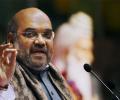
Union Home Minister Amit Shah lauded UPI on its 10th anniversary, highlighting its role in India's digital transformation. Launched by NPCI in 2016, UPI has become the world's largest real-time payment system, witnessing a massive surge in transaction volume and value, demonstrating its success in empowering people with swift, seamless, and secure digital transactions.

Chief Economic Advisor V Anantha Nageswaran stated that the second half of the current fiscal year (FY27) is expected to be challenging due to increased downside risks to global growth and rising interest rates worldwide.

India's foreign exchange reserves saw a significant drop of USD 7.794 billion, settling at USD 690.693 billion for the week ending May 1, as reported by the RBI, reflecting the impact of global events and central bank interventions.

Indian benchmark indices, Sensex and Nifty, saw early gains driven by lower crude oil prices and buying in Reliance Industries, even as the Reserve Bank of India maintained its benchmark policy rate for the fourth consecutive meeting, reinforcing confidence in the domestic economy.

Indian equities, particularly the Nifty 50, have significantly underperformed their Asian and global counterparts over the past year, with the index down 10.6 per cent. This lag is attributed to factors like rising global oil prices, rupee depreciation, and a lack of participation in the global chipmaker rally that boosted markets like South Korea and Taiwan.
India's foreign exchange reserves saw a significant drop of USD 5.654 billion, settling at USD 666.933 billion for the week ending June 26, following interventions by the RBI and public appeals by Prime Minister Narendra Modi to conserve forex.

India's foreign exchange reserves have surged to an all-time high, reaching USD 728.494 billion, according to the Reserve Bank of India. This increase is attributed to a rise in foreign currency assets and gold reserves.

The Reserve Bank of India has marginally increased its GDP forecast for the current fiscal to 6.7 per cent while slightly lowering the inflation projection to 5 per cent. The central bank noted that while domestic economic activity shows resilience, global turbulence, particularly re-escalating conflicts and volatile oil prices, continues to pose risks to the inflation outlook.

RBI Deputy Governor Rohit Jain discussed the future of India's foreign exchange markets, highlighting the increasing role of local currencies in cross-border trade, the impact of technology, and existing challenges. He emphasised the need for market evolution to facilitate India's global engagement, absorb shocks, and serve all users efficiently. Jain also addressed concerns about unauthorised forex trading platforms and the importance of customer awareness.

Tata Trusts, the majority shareholders of Tata Sons, have proposed merging two operating companies, Tata Electronics Systems Solutions Pvt Ltd (TESS) and Tata Consulting Engineers (TCE), with Tata Sons. This restructuring aims to shed Tata Sons' classification as a non-banking financial company (NBFC) and a core investment company (CIC), thereby allowing it to retain its status as an unlisted private company and resolve ongoing disputes regarding its future ownership.

The United Arab Emirates (UAE) has expressed intent to invest an additional $25 billion in India, with an ultimate goal of reaching $100 billion in investments, Union Minister Piyush Goyal announced. This comes as both nations plan to enhance cooperation in shipping, ports, energy, and emerging technologies, against a backdrop of expanding bilateral trade.

India's deposit growth has reached a 15-year high of 17.8 per cent, primarily driven by a surge in foreign currency non-resident (bank), or FCNR(B), deposits. This influx of funds is expected to lead to a softening of corporate loan rates as banks seek to deploy their excess liquidity.

India's foreign exchange reserves have surged by $12.42 billion, reaching a new all-time high of $729.33 billion for the week ended August 21, driven by increases in foreign currency assets and gold reserves.

India's balance of payments (BoP) recorded an $8.1 billion deficit in the first quarter of 2026-27 (Q1FY27), a significant increase from a $4.5 billion surplus in the corresponding period of the previous year, primarily driven by a sharp reversal in portfolio flows.

Tata Sons Chairman N Chandrasekaran affirmed India's robust economic position amidst global uncertainty, emphasising that energy security, advanced manufacturing jobs, and investment in human capital are 'critical' for sustaining the nation's long-term growth.

The CBI has filed a closure report in the 2002 disinvestment of Hindustan Zinc Ltd, stating that allegations of irregularities could not be substantiated. This comes despite a 2022 Supreme Court directive by then-CJI D Y Chandrachud to register a regular case, citing sufficient material and concerns over undervaluation and the role of a global advisor. The special court will now decide on the report.

The Indian stock market experienced a significant downturn, with the Sensex crashing over 1,000 points and the Nifty hitting a fresh 52-week low, driven by sustained selling from foreign institutional investors, the RBI's monetary policy tightening, and elevated Brent crude prices.

The CBI has registered a case against Reliance Capital Limited (RCAP), its former chairman Anil Ambani, and others for an alleged Rs 2,684.57-crore fraud involving investments made by the Life Insurance Corporation of India (LIC). Anil Ambani has denied any wrongdoing. The LIC alleges criminal conspiracy, misrepresentation, and fraudulent diversion of funds.

India has removed a key regulatory hurdle, allowing exporters to receive payments in Indian currency while retaining incentives under the country's foreign trade policy, a move aimed at promoting wider use of the rupee in international trade.

Maharashtra is grappling with an escalating drought crisis, with 305 talukas now declared drought-hit, prompting the state government to announce Rs 5,000 in financial aid for farmers before Diwali and extend comprehensive relief measures.

A 25-basis-point increase would restore some real monetary restraint when expected inflation has risen, liquidity remains easy and growth is strong, points out Amarendu Nandy.

Unified Payments Interface (UPI) transactions in India reached Rs 29.8 lakh crore in August, approaching record levels. Volume also hit a new high of 24.51 billion transactions, driven by festive activities like Raksha Bandhan. The digital payment system continues its rapid growth, expanding its global presence to 11 countries, with further growth anticipated during the upcoming festive season and new use cases like credit on UPI.
India's Unified Payments Interface (UPI) recorded an unprecedented 24.51 billion transactions valued at Rs 29.8 lakh crore in August, largely propelled by the Raksha Bandhan festival. This surge marks a 22% annual increase in volume and 20% in value, highlighting the expanding reach and depth of the UPI ecosystem. Experts anticipate further growth during the upcoming festive season, while UPI's international acceptance now spans 11 countries.
Prime Minister Narendra Modi celebrated the Unified Payments Interface (UPI) completing a decade, calling it a major turning point in India's digital payment journey. Launched in 2016, UPI has become the backbone of India's digital payments ecosystem, showing exponential growth in transaction volume and value, and is a key pillar of the Digital Public Infrastructure.

The Unified Payments Interface (UPI) has completed a decade since its launch, becoming the backbone of India's digital payments ecosystem. It has seen exponential growth in transaction volume and value, expanding financial inclusion and setting a global benchmark for real-time payments.

Bank fraud is no longer just an external cyber threat -- insiders with legitimate access can exploit banking systems, trusted credentials and institutional blind spots to quietly siphon money.

Digital money is gradually starting to behave like software. It's no longer inert -- sitting passively in accounts. In the not-so-distant future, your money could become 'smart' and 'active,' understanding your preferences, paying your bills automatically, optimising your returns, and managing your risks -- all without you having to manage the details.

Gold futures saw a significant rise for the second consecutive day, driven by strong overseas market rallies, increased safe-haven demand due to geopolitical uncertainties, and a weaker US dollar. This surge coincided with the Reserve Bank of India's decision to maintain its repo rate, reflecting a focus on growth amidst global inflation concerns and easing oil prices.
The Indian government has mandated that banks and payment providers cannot levy charges on UPI transactions up to Rs 2,000 or on payments made via RuPay debit cards. This directive follows an amendment to the Payment and Settlement Systems Act, 2007, aiming to sustain and expand the digital payments ecosystem.
